
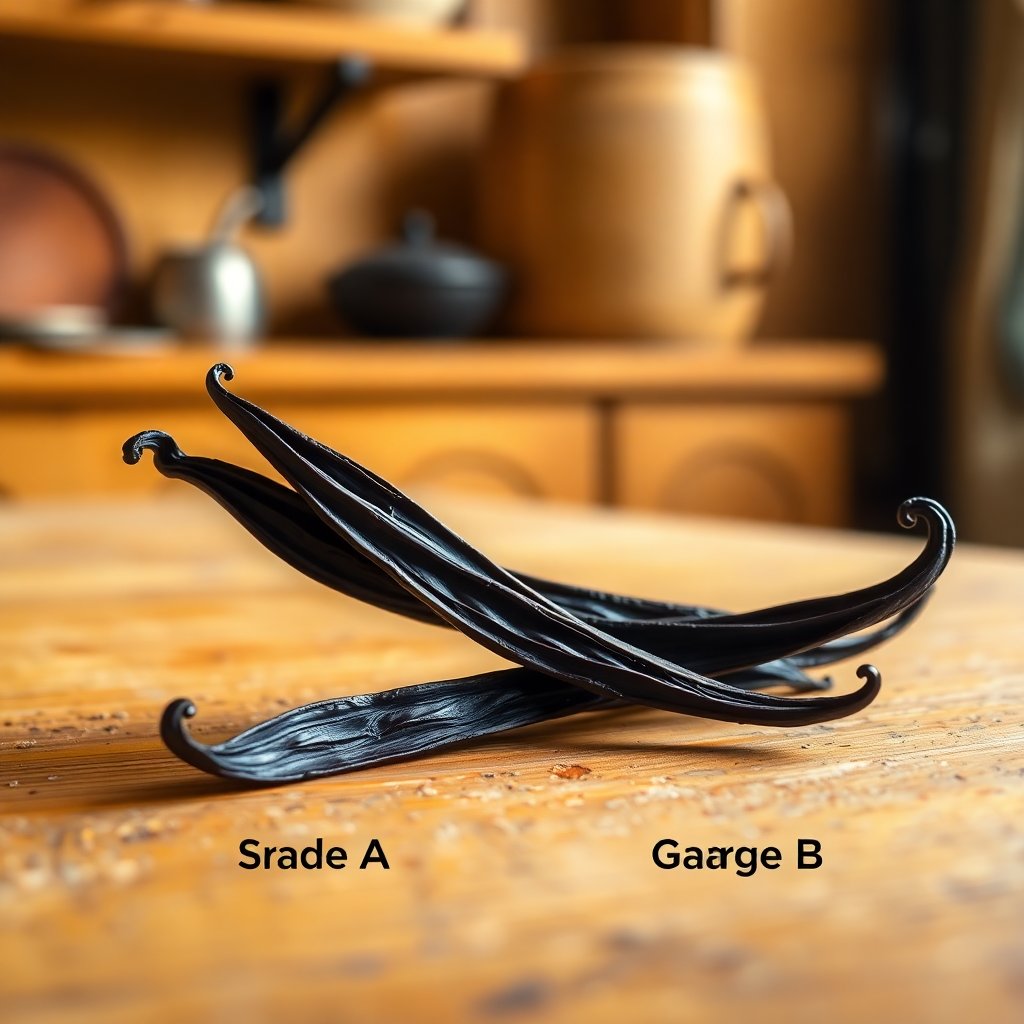
When you shop for vanilla beans, you'll see products labeled Grade A and Grade B. The naming is a bit counterintuitive — Grade B sounds inferior, but for one major use case it's actually the better choice.
Here's exactly what each grade means and when to use which.
What Makes a Bean "Grade A"?
Grade A beans — sometimes called "gourmet" or "prime" — are:
- Plump and moist: At least 25–30% moisture content
- Long: Usually 6–8 inches
- Flexible: They bend without snapping
- Shiny: A slightly oily surface is a sign of quality
- Seed-rich: Packed with black vanilla caviar inside
These beans are beautiful to work with. When you split and scrape a Grade A bean over a pot of warm cream, the seeds disperse easily, the aroma is intense, and the visual result is exactly what you want — hundreds of tiny black specks that signal real vanilla to anyone who sees the finished dish.
→ Shop Grade A Madagascar Vanilla Beans on Amazon
Best uses for Grade A:
- Ice cream base (steeping in warm milk/cream)
- Crème brûlée, panna cotta, custard
- Vanilla sugar (the beans perfume the sugar beautifully)
- Any recipe where you're scraping the seeds directly into the dish
- Situations where the look of the vanilla specks matters visually
- Gifting whole beans
For a comparison of Madagascar vs. Tahitian beans within Grade A, see our Madagascar vs Tahitian vanilla beans guide — the flavor differences are real and worth knowing before you buy.
What Makes a Bean "Grade B"?
Grade B beans — also called "extract grade" — are:
- Drier: 15–25% moisture content
- Slightly shorter and thinner on average
- Less visually impressive: May have slight blemishes or splits
- Just as flavorful — often more concentrated vanilla compound per ounce due to lower moisture
The key point: Grade B beans have less water, which means more vanilla flavor compounds per gram of bean. This makes them ideal for extract-making, where you want maximum extraction into the alcohol.
A Grade B bean that weighs 2 grams contains more vanillin than a Grade A bean of the same weight, because the Grade A bean's extra weight is largely water. For extract purposes, you're paying for what you actually want.
→ Shop Grade B Madagascar Vanilla Beans on Amazon
Best uses for Grade B:
- Homemade vanilla extract (this is their designed purpose)
- Vanilla powder (dry beans grind more easily)
- Any infusion where the bean will be strained out
- Large-batch extract making where cost matters
Side-by-Side Comparison
| Factor | Grade A (Gourmet) | Grade B (Extract) | |---|---|---| | Moisture content | 25–30% | 15–25% | | Appearance | Plump, shiny, flexible | Drier, may have splits | | Seed content | High | Similar (often higher per gram) | | Vanillin concentration | Moderate (diluted by moisture) | Higher per gram | | Best use | Scraping seeds, ice cream, display | Extract, powder, infusions | | Price | Higher | Lower (often significantly) | | Shelf life | Shorter (more moisture) | Longer (drier) |
The Price Difference
Grade A beans almost always cost more than Grade B — sometimes by 30–50%. For extract-making, you're paying a premium for moisture and appearance that doesn't translate into a better extract.
Here's how to think about it: if you buy 10 grams of Grade A beans and 10 grams of Grade B beans, the Grade A beans have more water weight. The actual vanilla flavor compound content is similar — possibly higher in the Grade B because there's less diluting water.
If you're buying beans specifically to make extract, Grade B is the smarter purchase every time. Spend those savings on more beans, which will directly improve your extract's flavor.
Can You Use Grade A for Extract?
Yes. Grade A beans make perfectly good extract. You're just paying for visual qualities that don't contribute to extract flavor. If you happen to have Grade A beans and want to make extract, go for it — you'll get a great result.
Similarly, can you use Grade B beans for scraping? Technically yes, but they're harder to work with (drier, less pliant) and yield fewer visible seeds. For dishes where the specks matter, Grade A is worth the price.
Where to Buy: Quality Indicators
Beyond Grade A vs. Grade B, here are signs of quality to look for regardless of grade:
For Grade A beans:
- Plump appearance throughout the full length (not just at the base)
- Slight gloss on the surface
- No white crystalline residue (that's actually "givre" — vanilla frost — and is a positive sign of high vanillin content)
- Characteristic sweet, floral vanilla smell when you open the package
For Grade B beans:
- Firm but not brittle (should bend slightly before snapping)
- Strong vanilla smell even in dried form
- From a reputable supplier who can tell you the origin country and harvest date
Avoid:
- Beans that smell fermented or off
- Very short beans (under 4 inches) sold at Grade A prices
- Beans without a listed country of origin
Buying in Bulk vs. Small Quantities
If you're making extract regularly (or for gifts), buying Grade B beans in bulk significantly reduces your per-bean cost.
A 1-pound bag of Grade B Madagascar beans contains roughly 100–130 beans — enough for 15–20 standard batches of extract. Stored properly (in a zip-lock bag inside a sealed container in a cool, dark place), they'll stay usable for 1–2 years.
→ Shop bulk Grade B vanilla beans on Amazon
For casual home use, a 25-bean pack is plenty to start. For serious extract-makers or anyone making holiday gifts, the bulk purchase pays off quickly.
FAQ
Why is it called "Grade B" if it's better for extract? The grading system was originally designed for vanilla beans sold whole or used directly in cooking, where appearance and moisture content are visually important. Grade A wins on those criteria. Grade B's advantages (higher vanillin concentration per weight, lower price) only matter for extract, which came as a secondary use. The naming hasn't caught up with how people actually use beans.
How many Grade B beans per cup of vodka? 5–6 beans per cup (8 oz) is the standard starting point. For a richer extract, use 6–7. For double-strength extract, go up to 8–10. Our how many vanilla beans per cup of vodka guide has the detailed breakdown.
Can Grade A and Grade B be mixed in the same extract batch? Absolutely. Some extract-makers use Grade A beans they've already scraped (for a recipe) alongside fresh Grade B beans to maximize value. The Grade A beans still contribute flavor even after scraping, and the Grade B beans provide concentrated extraction.
Do Grade B beans come in Madagascar and Tahitian varieties? Yes. Grade B classification applies to both Planifolia (Madagascar/Bourbon) and Tahitensis (Tahitian) varieties. Madagascar Grade B is the most common and most affordable. Tahitian Grade B is less common but excellent for extract if you want that floral, fruity flavor profile.
How do I store vanilla beans to maximize shelf life? Wrap in plastic wrap or seal in a zip-lock bag, then store in an airtight container at room temperature. Avoid refrigerating (the cold and moisture fluctuation can cause mold). Properly stored, Grade A beans last 6–12 months; Grade B beans last 1–2 years. If beans dry out completely, you can rehydrate briefly in warm water before use.
Quick Decision Guide
Use Grade A when: You're scraping beans directly into a recipe, making vanilla sugar with whole beans as the centerpiece, infusing dairy, or gifting whole beans to someone who will cook with them.
Use Grade B when: You're making homemade vanilla extract, vanilla powder, or any preparation where the beans will be strained out and you're after the flavor compounds.
Either works for: Any recipe where the bean is strained out and you're just after the flavor.
This post contains affiliate links. We only recommend products we've actually used.
As an Amazon Associate we earn from qualifying purchases. This article contains affiliate links; if you buy through them we may earn a small commission at no additional cost to you.